7. Extract what they say

A document on the case is paper. The Extract tab is where it becomes values, read with the schema its type points at, with the page each value was read from kept beside it.

The Extract tab listing every document on the case, bought and uploaded, each with a Read this document button

Both kinds of document together: what matters here is whether a document has a type with a schema behind it, not where it came from.

A document that cannot be read says why, in the place where the button would otherwise be:

  • Not classified: set its type on the Documents tab.
  • No extraction schema for this type: write one, and the link is right there.

Read it

Press Read this document. It is a paid act: the document is sent to be parsed and read, and the pages billed are shown afterwards. It reports its progress as it goes: Queued, Sending the file, Mapping the pages, Reading the document.

Leave the page if you like. The extraction settles on its own and is there when you come back.

Check the evidence

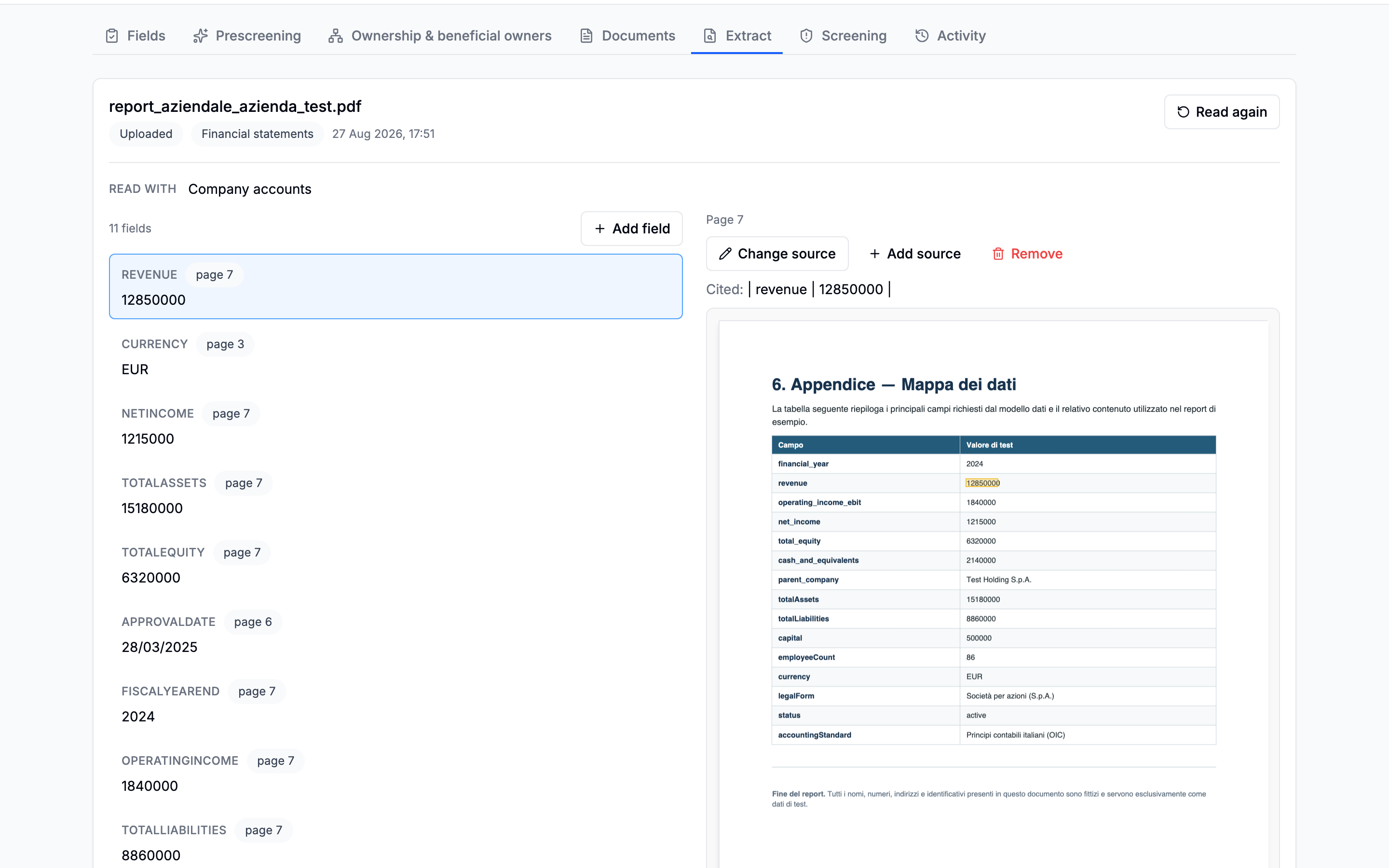
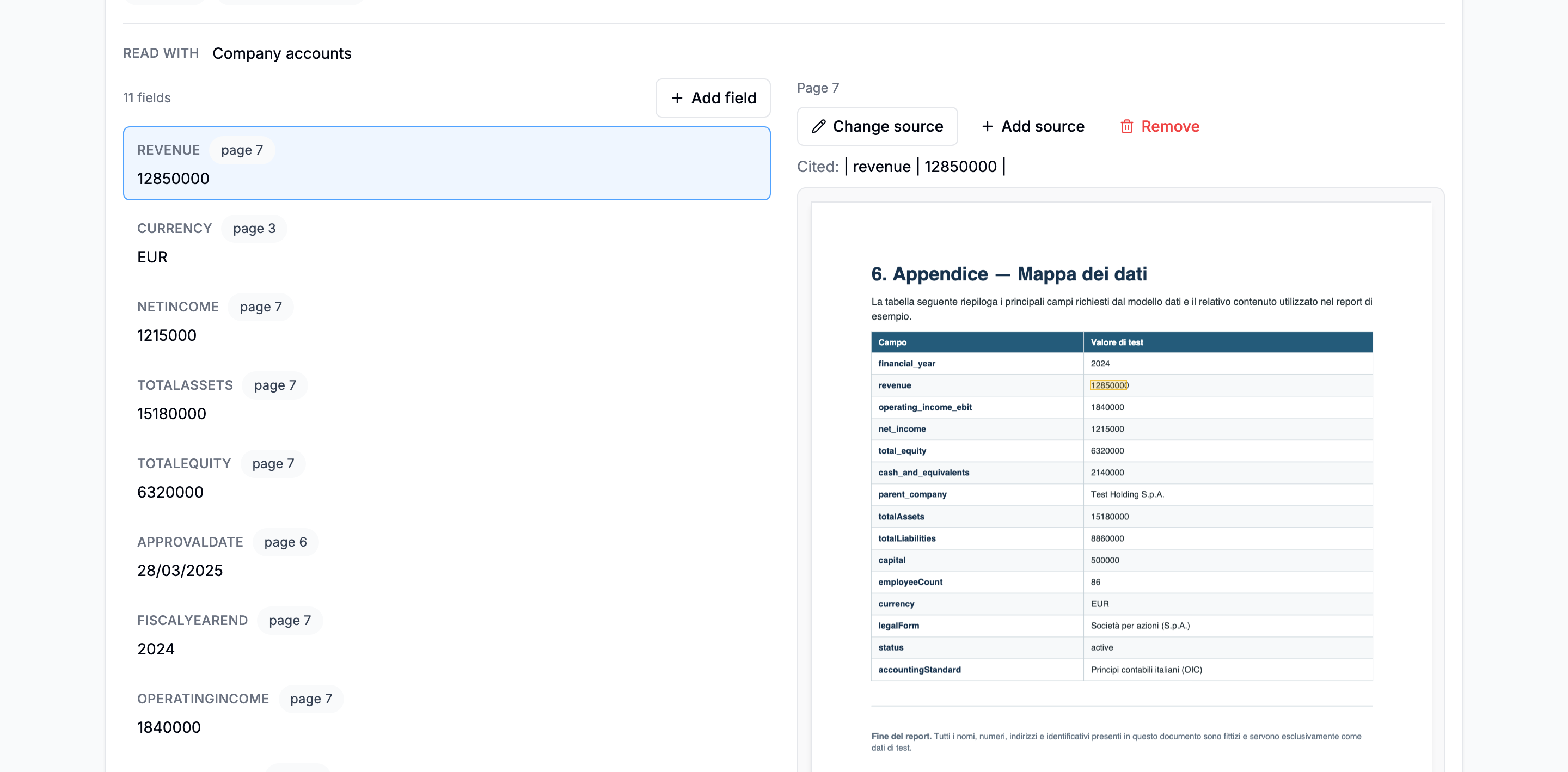
This is the part worth your time. Every value the schema pulled out is listed with the page it came from, and clicking one shows you that page with the passage marked.

The evidence viewer with the extracted values on the left and the source page rendered on the right, the cited passage highlighted
The value, and the words on the page it was read out of.

Three things you can do here, and they are the difference between a document that was read and a document you have checked:

  • Correct a value. The reading is a model's reading; the paper is stronger than the reading. A correction outranks every automatic source on that field.
  • Point a value at the right passage, when the citation landed on the wrong line.
  • Remove a citation that supports nothing.

Everything you do here is recorded in the case's activity with what the value was before.

The source editor dialog, choosing the passage on the page that a value was read from
Correcting where a value came from, not just what it says.

Where the values go

Straight into the Fields tab, joined onto the fields your configuration asked for by name. A schema written for an Italian bilancio that calls a figure utile_esercizio answers the field called netIncome, because the catalogue carries the aliases.

That join is also the reason a value can go missing in two different ways. Either no document carrying it was read, or the schema that read it called it something else, and both are reported, from both ends. See Configurations: fields.


Next: Work the Fields tab.

Going deeper: Extraction · Reading a document