8. Work the Fields tab
This is the tab that answers is this case done. Everything else is somewhere you go because this told you to.

Reading a row
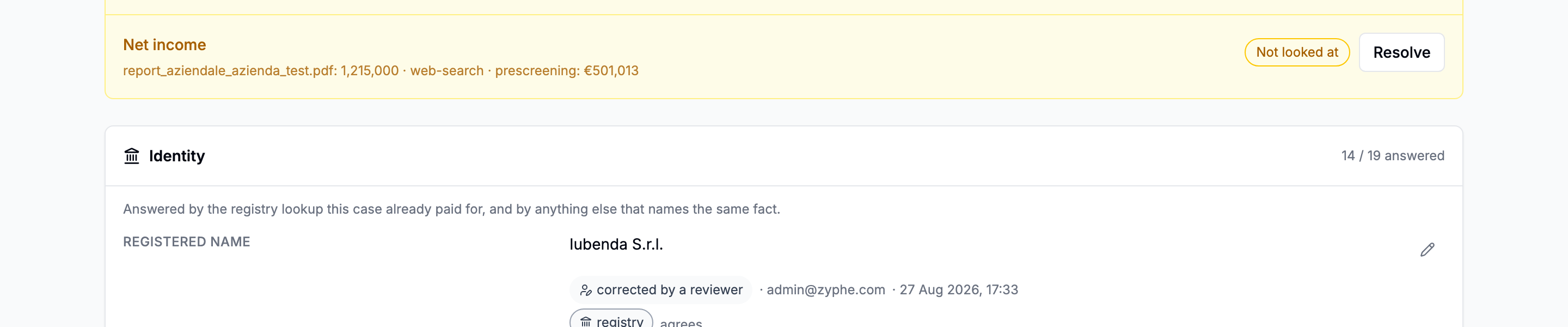
A row is not the answer. It is every answer, attributed. The strongest one is the value; the others sit under it as chips saying who else answered and whether they said the same thing.

Registry, document, web search. Each chip links to what it rests on: the page reference, or the sources the research pass used.
Two states are worth more than the value itself:
- Corroborated: several independent sources say the same thing. A stronger claim than any one of them makes alone.
- Disputed: two sources disagree. This is the finding, and it is the reason for asking more than one source in the first place.
Work the discrepancies first
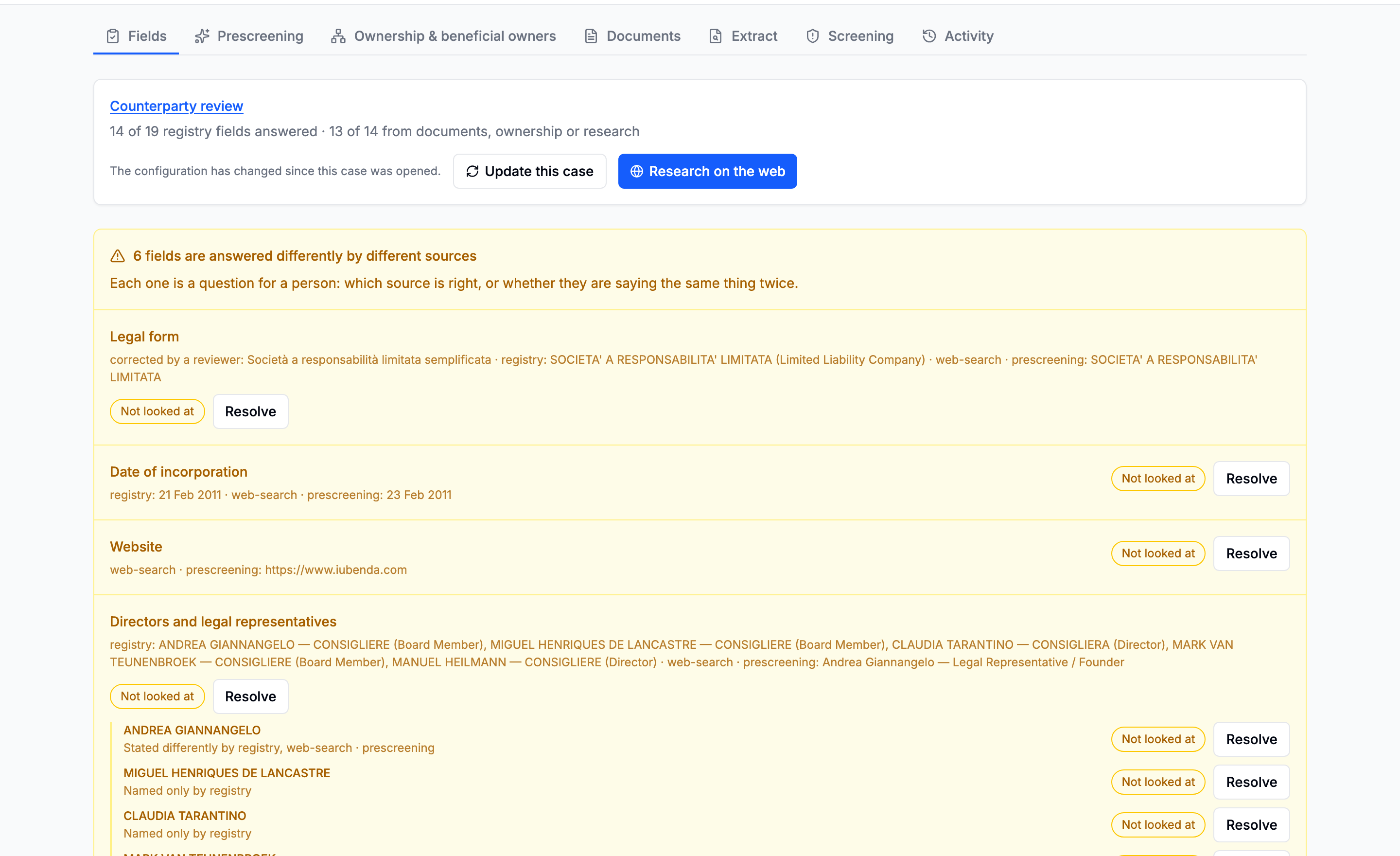
Disputed fields are lifted to the top of the tab as a queue, rather than left to be found by scrolling.

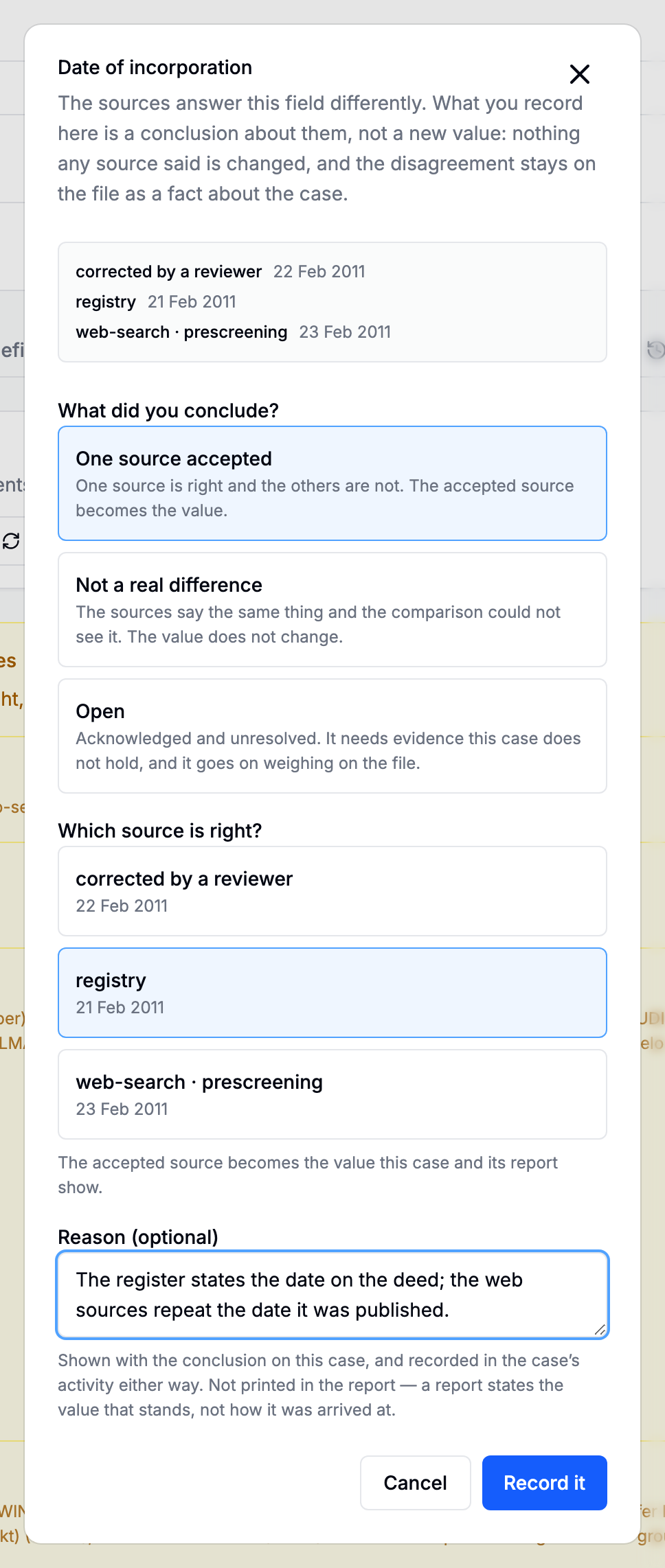
Each one is settled with a resolution, which records what you concluded, in one of three outcomes:
| Outcome | When | What it does |
|---|---|---|
| Accepted | One source is right and the others are not | That source's answer becomes the value |
| Not a difference | The sources agree and the comparison could not see it | Nothing changes except that somebody looked |
| Open | Acknowledged, and it needs evidence the case does not hold | Goes on weighing on the file |

A judgement was made against a particular set of answers. Upload a document tomorrow that answers the same field and the resolution is about a different question, so the field returns to the queue marked Sources have changed, carrying what was decided before. A green tick that stayed green through that would assert a review that never happened.
Correcting a value yourself
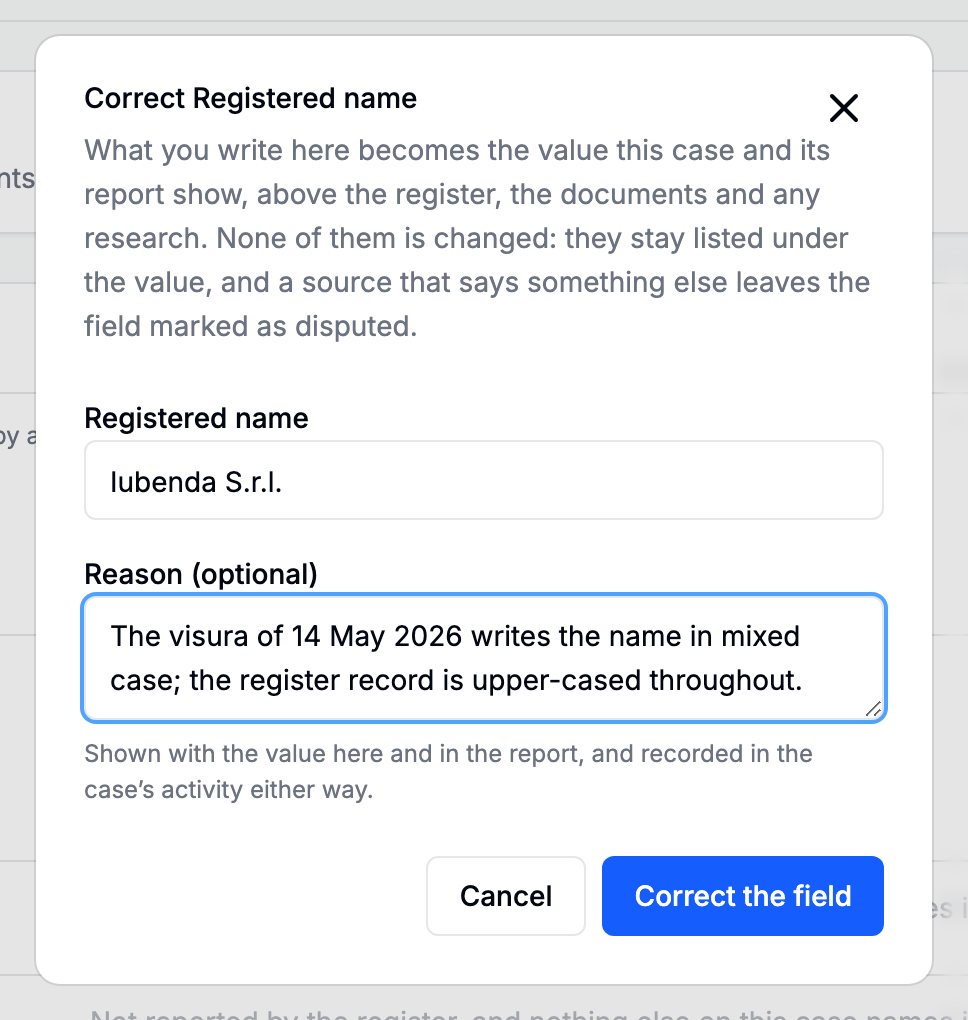
Separate act, separate button: the pencil on any row. A correction says the value is X, and it outranks every automatic source. It is the only way to answer a field no document on the case carries.

A corrected value prints in the report marked corrected by a reviewer. That line is the one thing in the document that rests on a person rather than on a source, which is why an affirmation of an existing source is a resolution rather than a correction.
Filling the gaps
A field nothing has answered says so plainly. Three ways out, in increasing cost:
- A document on the case answers it, but nothing read that document. Read it on the Extract tab.
- A document on the case answers it, but the schema called it something else. The row says which schemas would cover the field. Fix the schema and read the document again.
- Nothing on the case answers it. Run a research pass. It asks a model your configuration's own questions, by name, and brings back per-field answers with per-field links. It is allowed to say it could not find something, and what it says it could not find is shown, because it looked and could not find this is worth more than a confident answer nobody can tell from a correct one.

Next: Screen the people.
Going deeper: The Fields dossier · Disagreements · Corrections · Field research