9. Screen the people

Two checks, one table. They are asked of the same list of subjects: the company, its current directors, and the beneficial owners the ownership walk found. Looking at a director, you are asking one question: is there anything against this person.

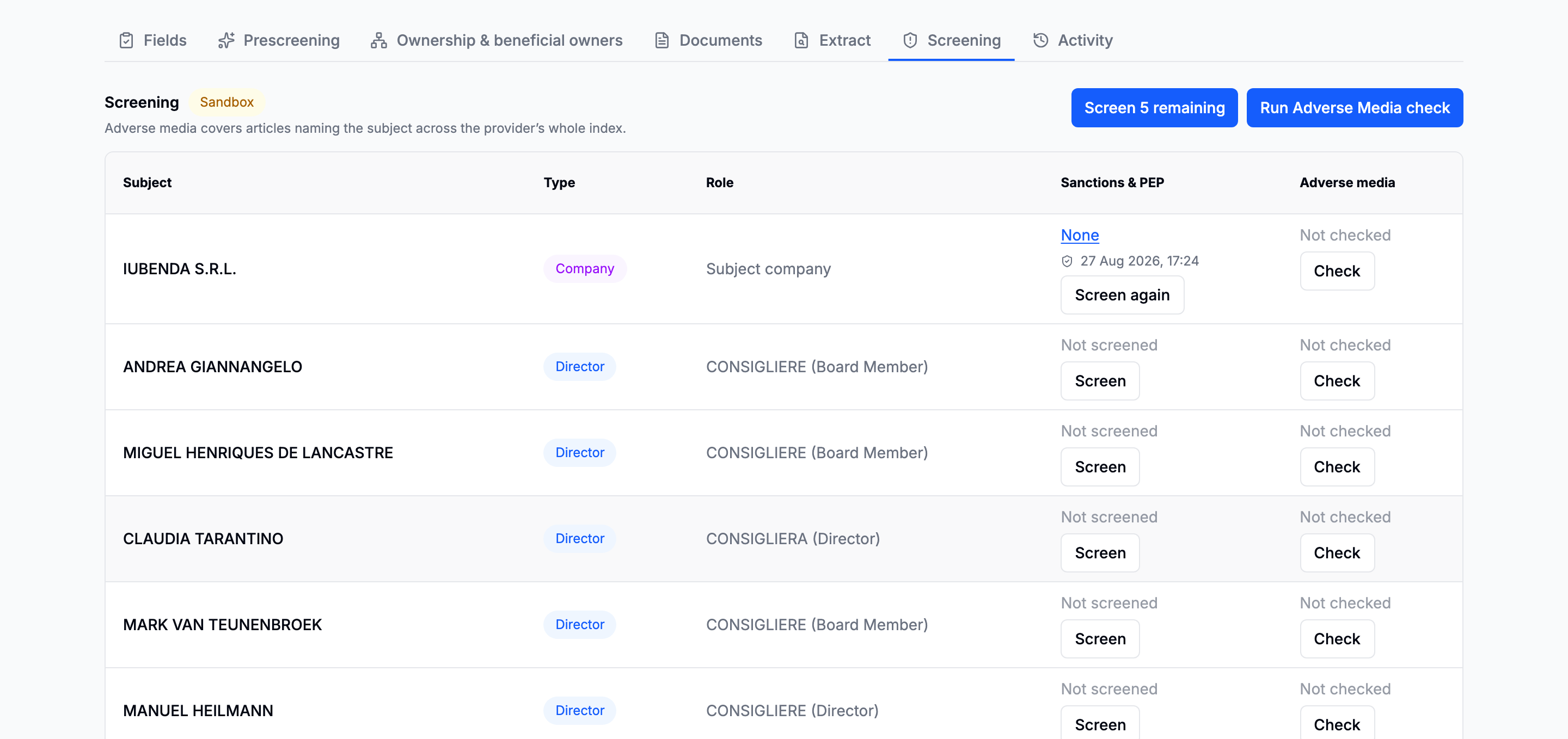
The screening tab, one row per subject with columns for the subject, its kind, its role, the AML result and the adverse media result
One row per subject, with a column per check. A row with nothing against it is an offer, not a result.

The list grows on its own. Walk another level of ownership and the people it finds appear here, waiting to be checked.

Only current appointments are offered

A director who left in 2016 is not part of the customer being onboarded. What goes in this list is almost the whole cost of this tab.

The watchlists

The subject company is screened as soon as enrichment lands, because there is exactly one of it and its cost is known. Everybody else is offered, never assumed: a case with nine directors and four owners is thirteen more billed calls, and thirteen is a number that belongs in front of you before you click.

The screening confirmation dialog naming each subject about to be screened and how many there are
The dialog names them. Screen one, or everyone not yet screened.

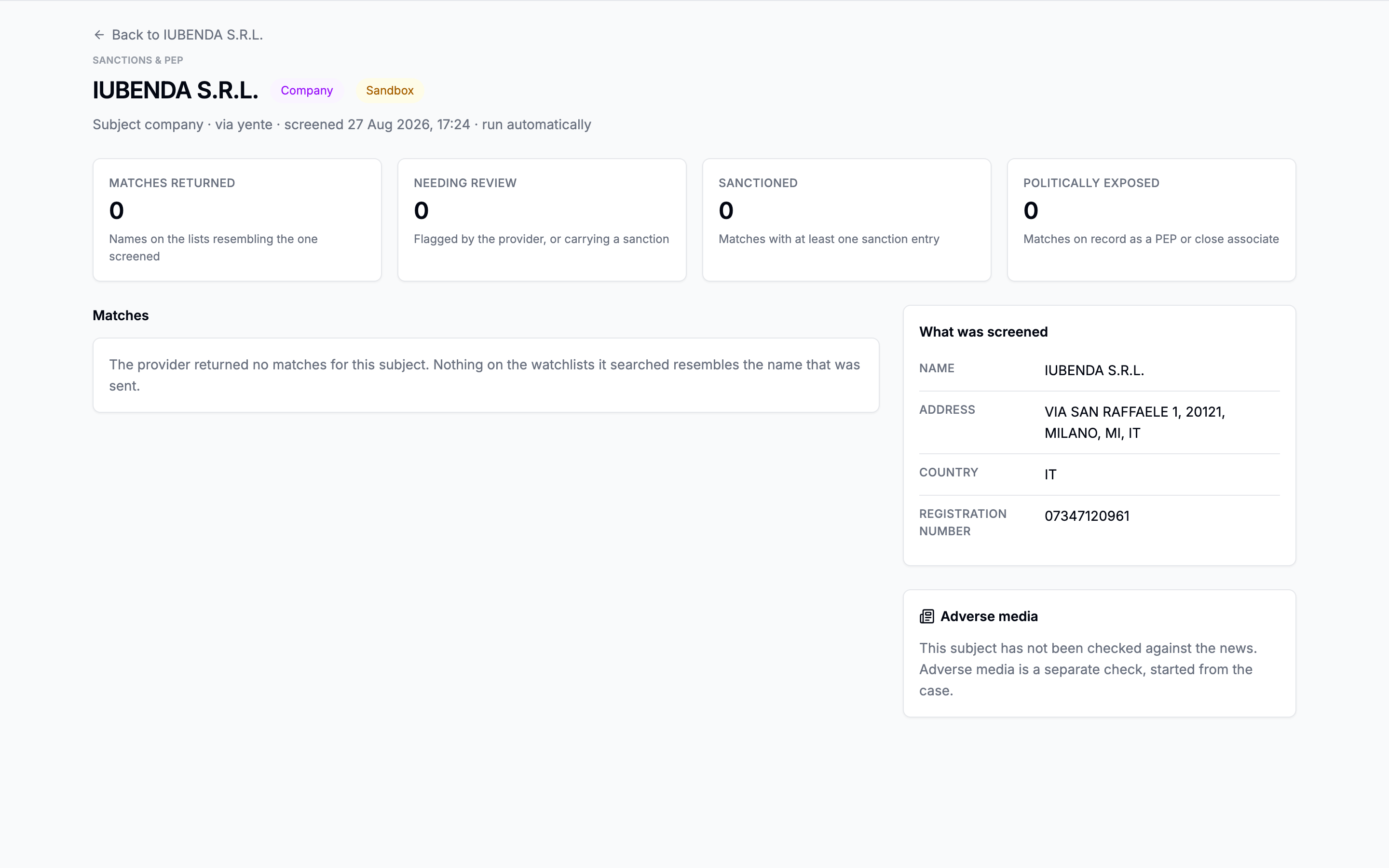
A screening comes back with its raw matches, unscored. Matches are not hits. A name match against a sanctions list is a candidate for review, and the result page is where you review it: every match, its list, its dates, its identifiers, and what actually matched.

The screening result page listing every match returned for one subject, with the list each came from
A result is a page of its own, linked from the cell. Its findings are not unrolled underneath the table.

Adverse media

The second column: news coverage naming the subject, by category. Nothing here runs unasked at all, because it is drawn against a monthly allowance and an allowance spent by opening cases is one that is gone when somebody needs it.

The cell shows the heaviest adverse category and how many more there are, never a total, because one article can be filed under several categories and adding them up gives a number larger than the articles that exist. Behind it, on its own page, are the per-category counts and the articles themselves, newest first.

The political category is noisy by design

A sitting politician scores in the millions there without a word of it being adverse. It is shown, and it is not given the treatment the adverse categories get.

Screening again

Discard, then screen. Two acts, deliberately: a completed screening refuses to be quietly replaced, because "refresh" would be the wrong word for something that re-bills.


Next: Issue the report.

Going deeper: Screening · Adverse media