Companies no register answers for
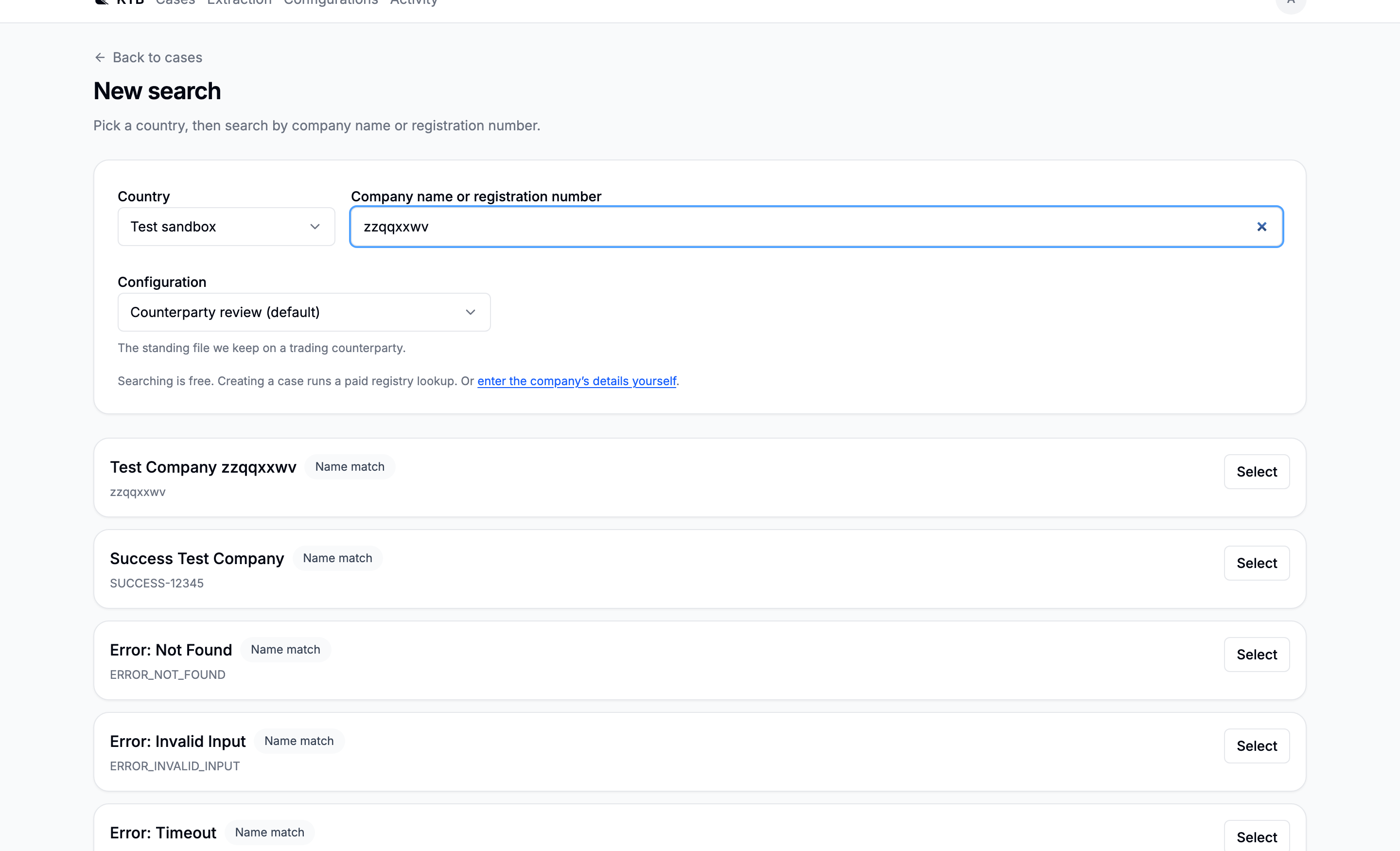
A search that returns nothing is not a dead end, and neither is a search that returns three companies none of which is the one you meant. Add the company by hand is offered in both places: on the empty result, and underneath a list of hits.
What the form asks
Only the country and the name are required. A company nobody's register carries is a company somebody knows five facts about, and a form demanding an incorporation date would refuse the cases it exists for.
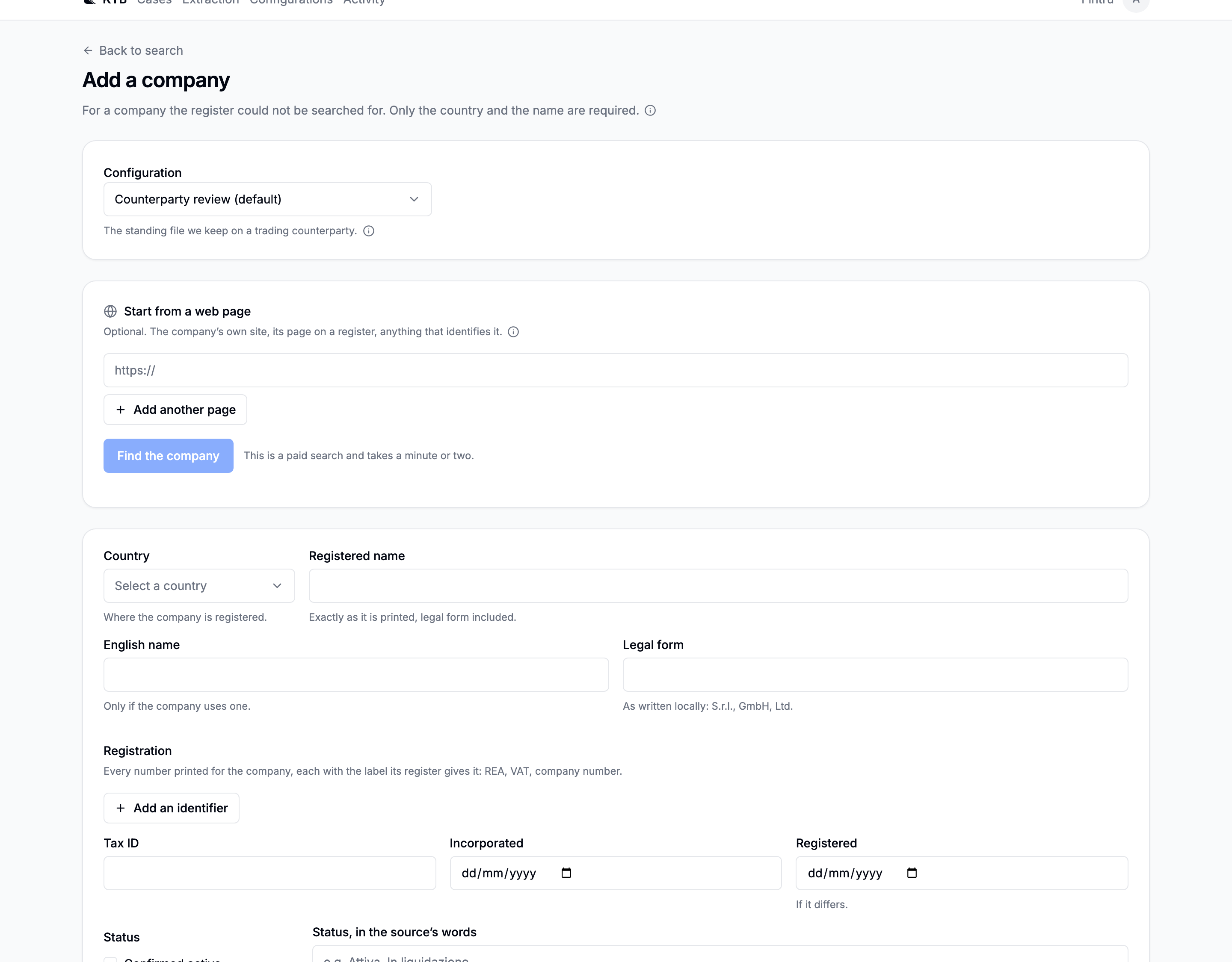
12/03/1998 is 3 December to one reader and 12 March to another, and nothing downstream could tell
the difference. The date controls are pickers for exactly that reason.
Filling it from a web page
Optional, and the only thing on this path that costs anything. Give the panel up to five URLs (the company's own site, its page on a register, a legal-notice page) and a model reads them and fills the form in.
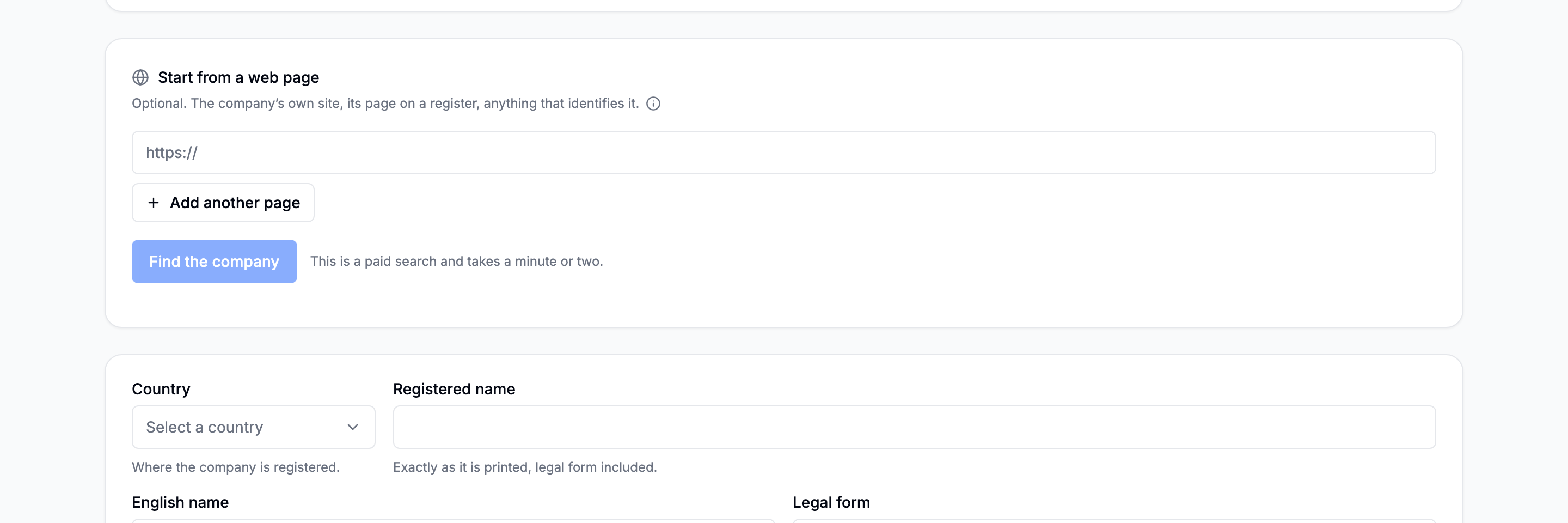
The pages are the anchor, not the fence: they fix which company this is, and searching outward from them is the job.
Three rules govern what comes back, and they are worth knowing because they decide how much to trust it:
- It never changes company. Anything found elsewhere must agree with the entity those pages identify.
- Every value carries the URL of the page that states it. A value without one is dropped rather than kept as a guess.
- What could not be established comes back as not found and is shown as such.
Nothing it produces is saved by itself. The values land in the form as a draft; anything you have already typed wins, and a field you then edit stops being the page's. The per-value attribution is what puts a link beside a value in the dossier later, and it must never point at a page that does not say it.
The configuration picker sits above the panel rather than below it, because it decides what the pages are read for. The same run is also asked your configuration's own questions (a revenue is not something you type into a company form) and those answers are filed against the new case, so you open a case that already has answers instead of empty Company details. It is asked for the shareholders and beneficial owners too, and what it finds becomes the first draft of the ownership structure.
What a manual case is, and is not
It is an ordinary case. The dossier, the report, the screening subjects and the research pass all work on it without knowing it was typed rather than fetched. Two things are deliberately not papered over:
- The status is Manual, not Complete. It is terminal and nothing is outstanding, but a case that never touched a register must not read as one that did.
- A typed value is its own kind of answer, with its own chip. It ranks below the registry and above a document, it never competes with the registry (a case has one or the other), and a document that disagrees with it still surfaces the field as disputed, which, on a company nobody else vouches for, is exactly the finding worth having.
What a manual case cannot do
Anything that needs a registry identifier, and the screens say so rather than offering a button that would be refused:
- Re-enrichment
- The paid ownership walk, answered the other way instead: the structure is entered on the same canvas
- The register document catalogue
Everything else is untouched: uploads, extraction, screening, adverse media, prescreening, field research, and the report.
Correcting it later
The details can be corrected on the same form the case was created with, and every field that moves is recorded in the case's activity with what it held before.
A typed value is the one source on a case that cannot be re-fetched, so without an edit path a typo would be permanent.