Company details and verification
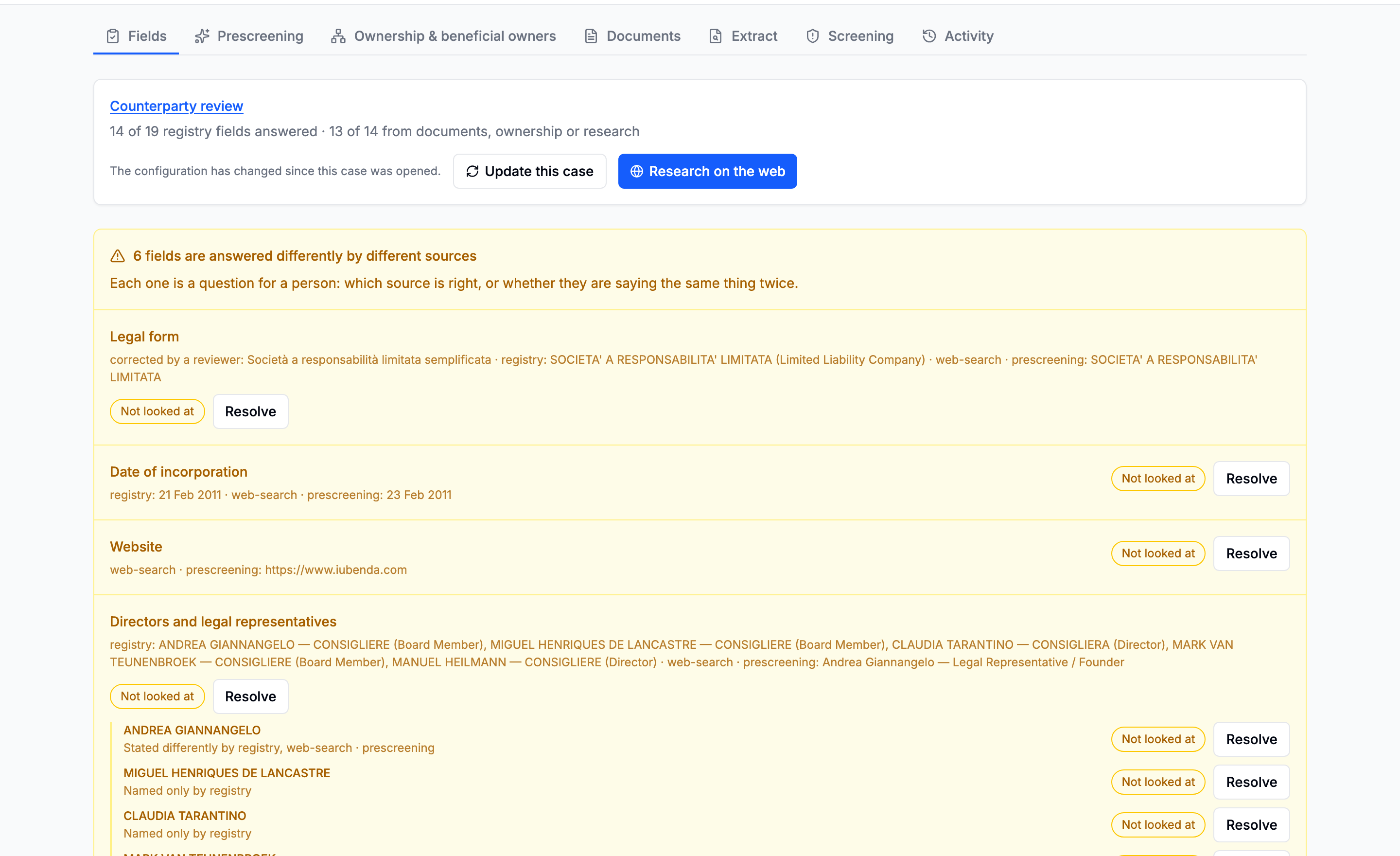
The Company details tab combines the organisation overview, verification dossier and AI research. The verification summary at the top shows how many required fields are answered and how many items still need review.
Reading a field
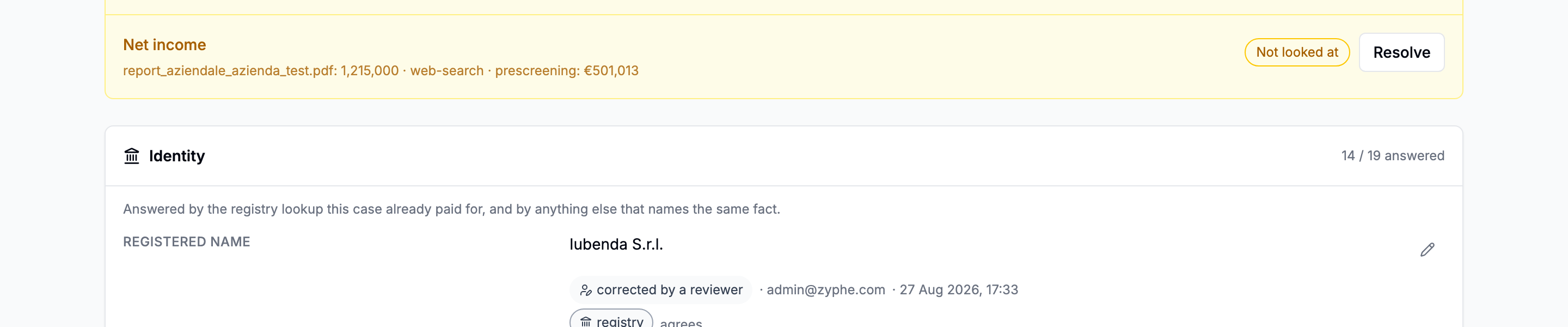
The displayed value is the strongest current answer. A source control identifies Registry, Document, AI research, reviewer correction or manual entry. Open it to compare all answers and follow the evidence.
Disagreements and corrections
When sources disagree, the field is added to the review count and offers Resolve. A resolution is a judgement about existing answers. A correction supplies a new reviewer answer and is labelled as such in the report.
New evidence can make an earlier resolution stale. The item returns to review because the set of answers has changed.
Filling a gap
If no source answers a field:
- check whether a relevant document has completed automatic extraction;
- correct the document type or schema and select Read again;
- use Run AI research for fields that need public-web research;
- record a reviewer correction when the value is known from evidence outside the automatic sources.